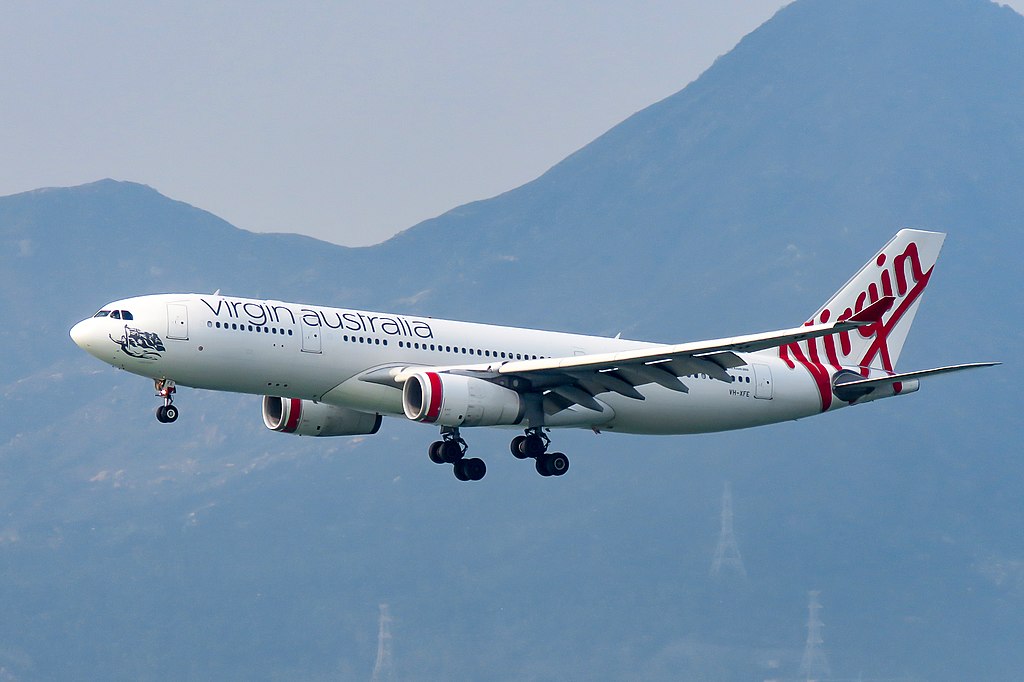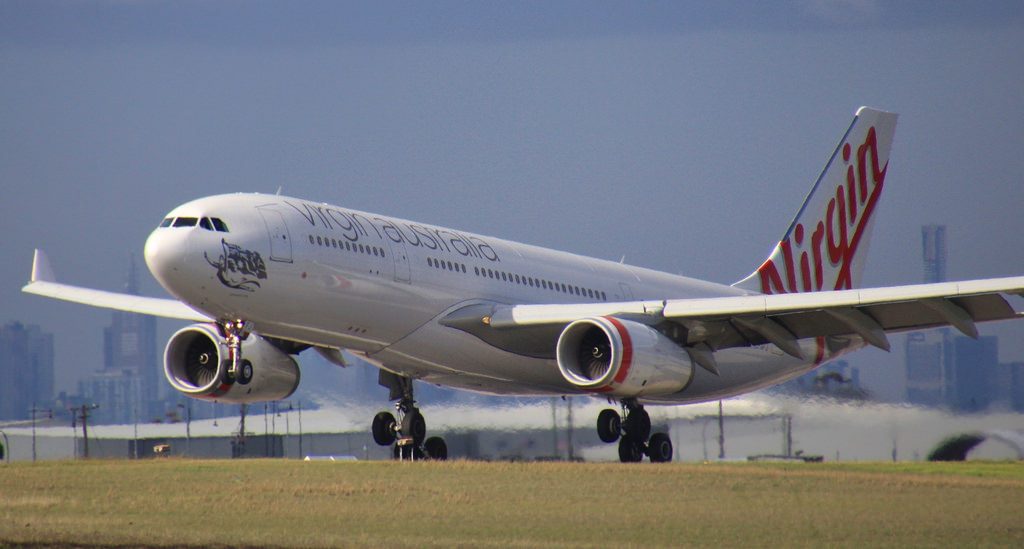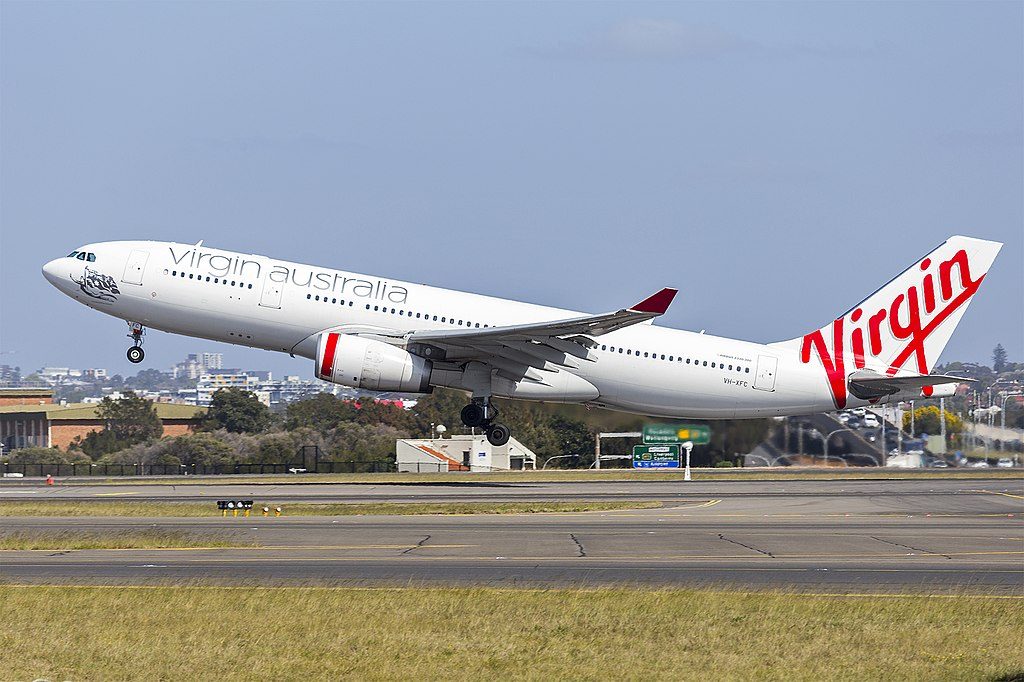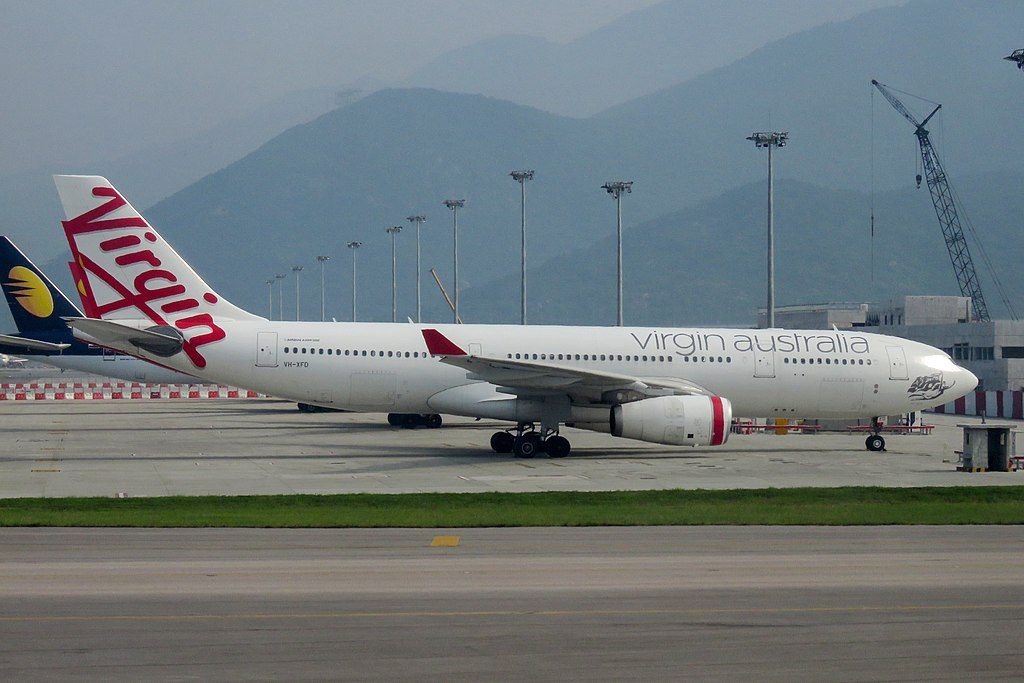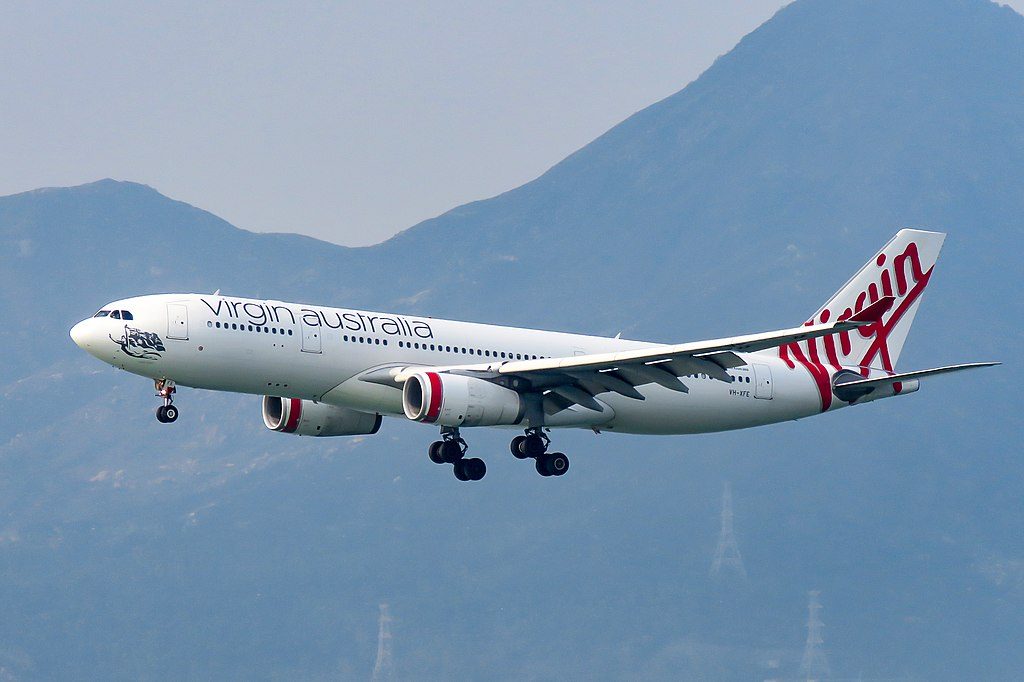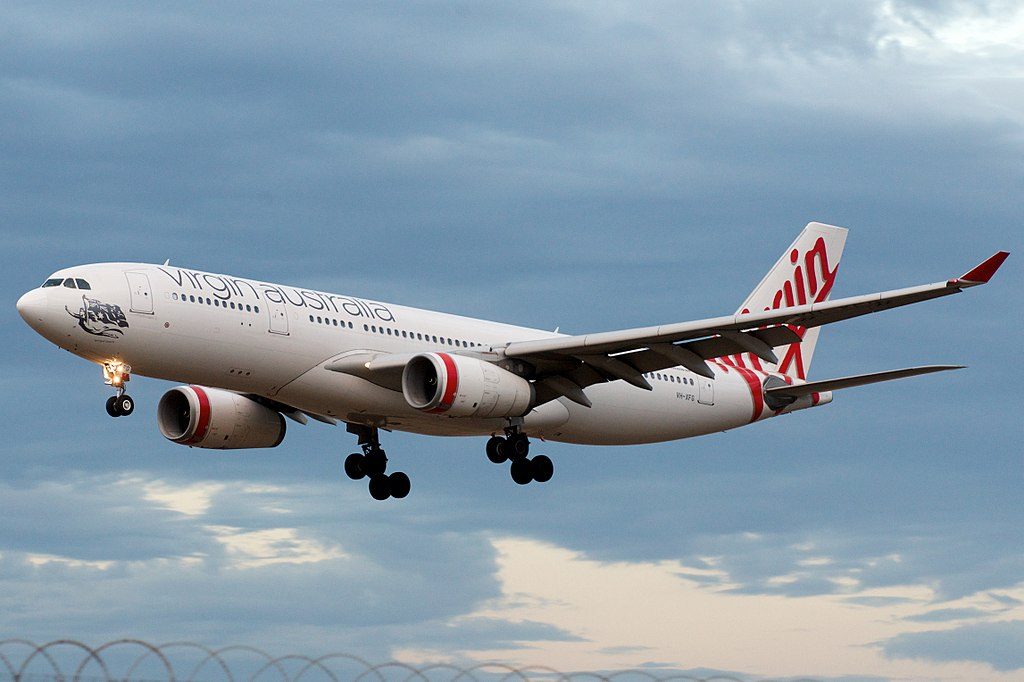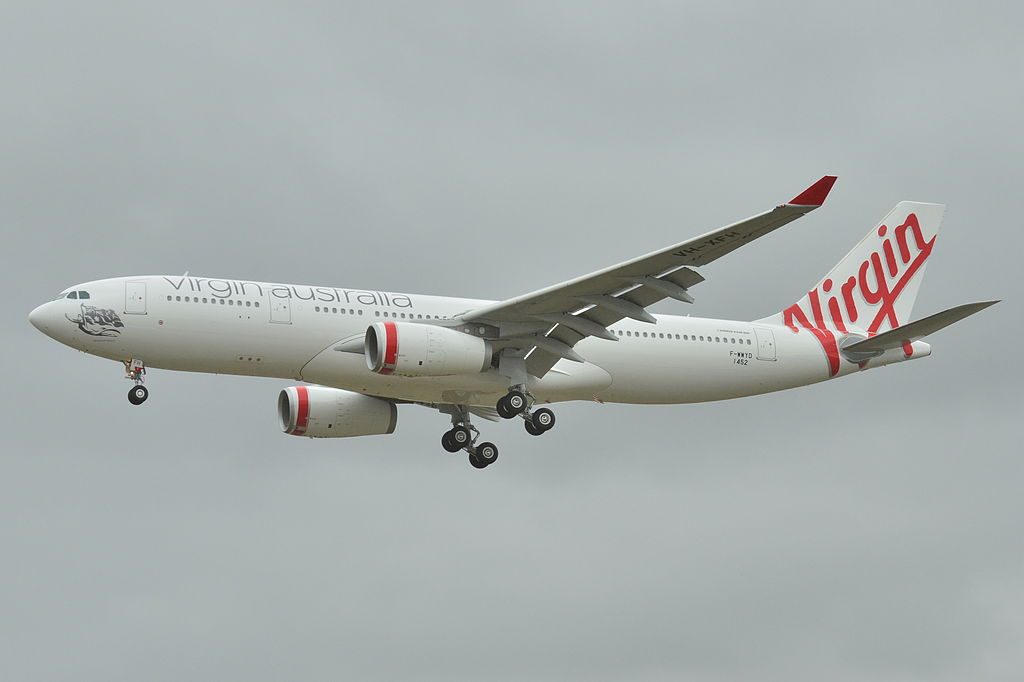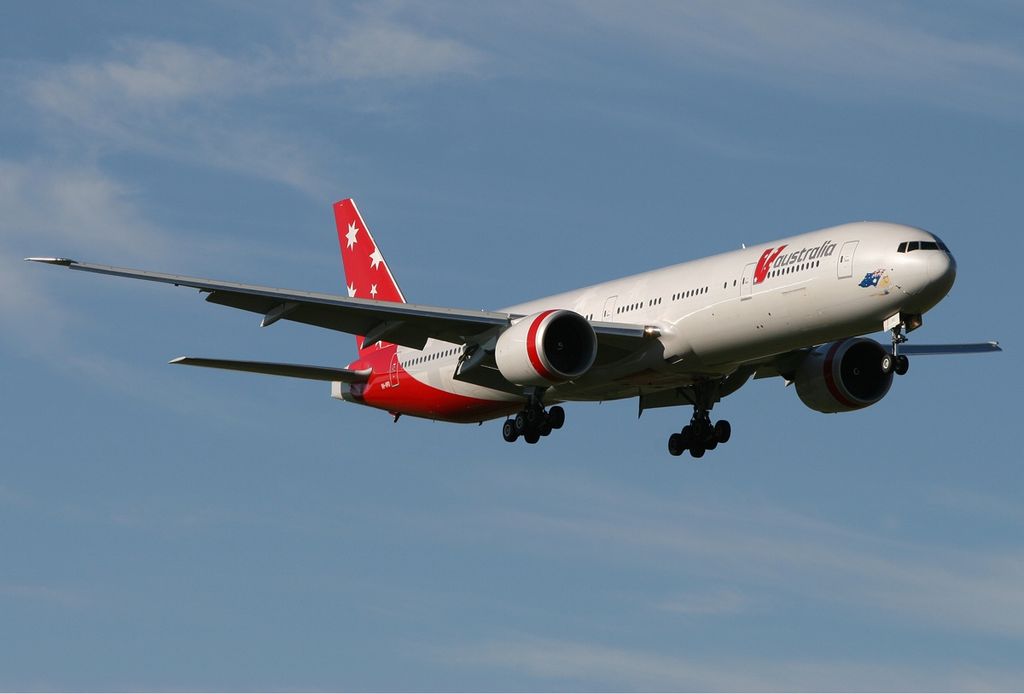
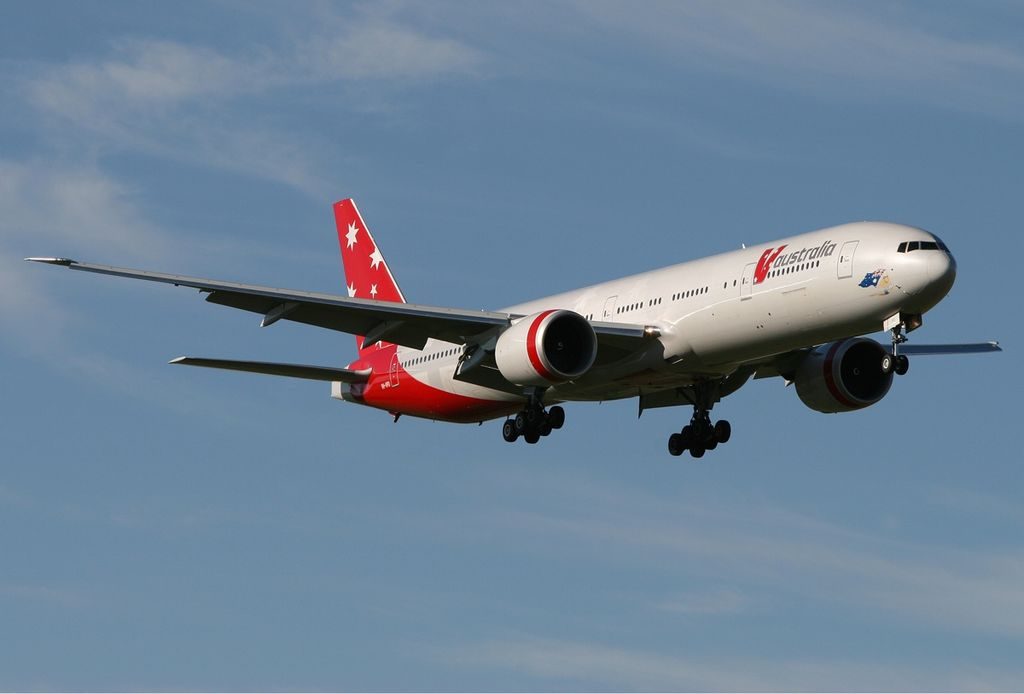
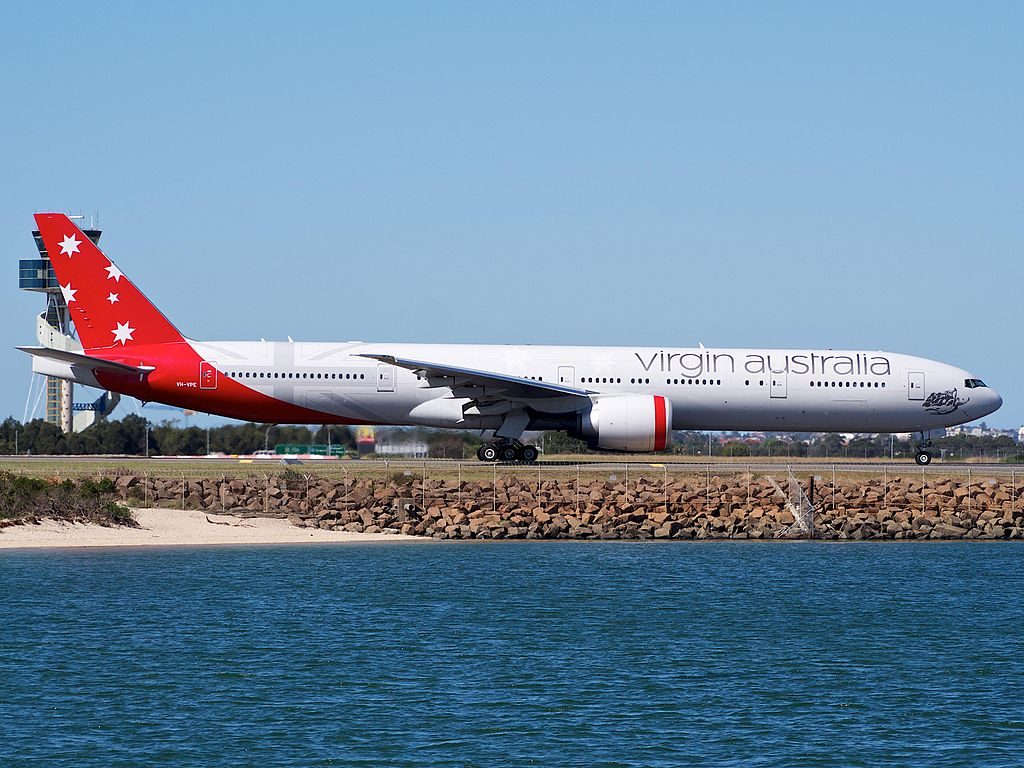
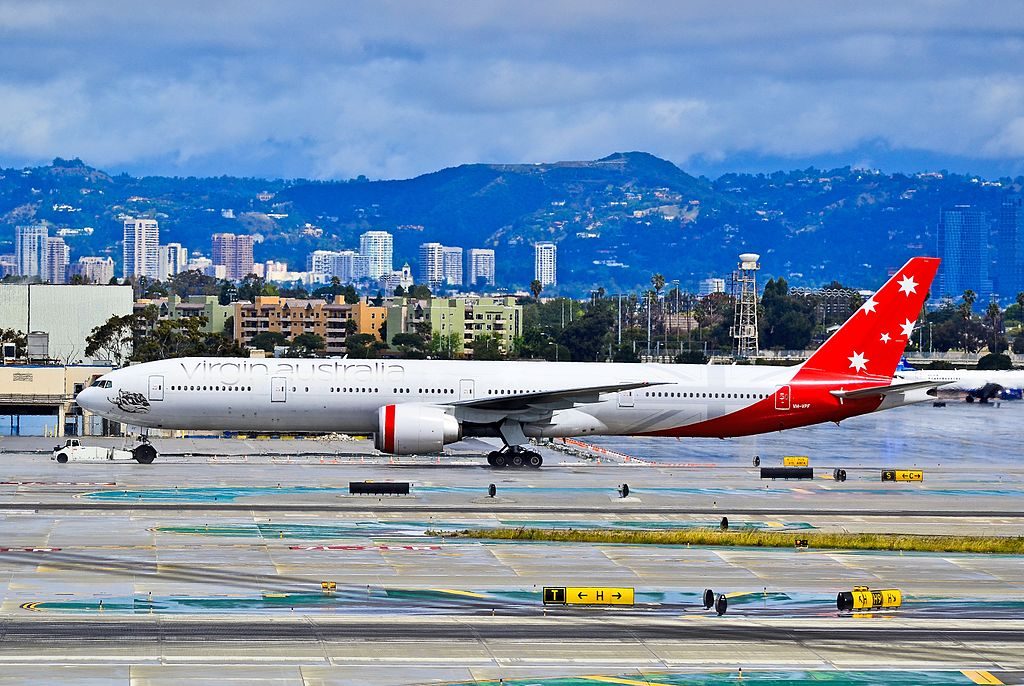
Virgin Australia Fleet Boeing 777-300ER Details and Pictures. Currently Virgin Australia operates 5 wide-body long-haul aircraft Boeing 777-300ER.
Boeing 777 is two-engine turbojet airplane that was fully constructed without paper drafts using only 3D computer graphics.
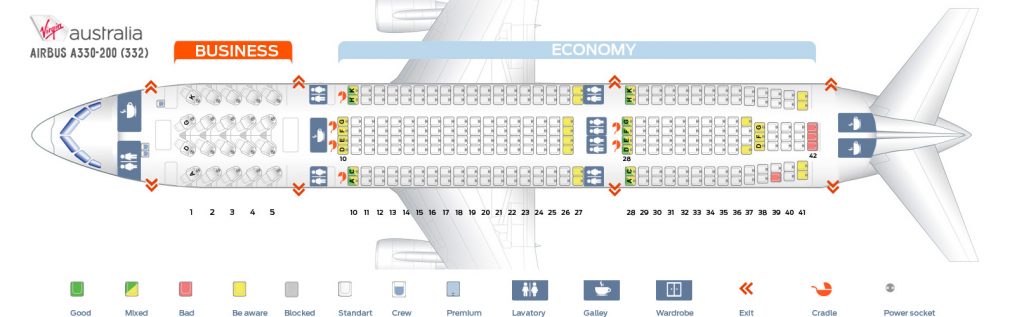
This aircraft flight on Virgin Australia long-haul routes, that also serves by Airbus A330-200.
There are 37 seats in Business Class, 24 seats in Premium Economy, 75 seats in Economy X and 203 seats in Economy Class.
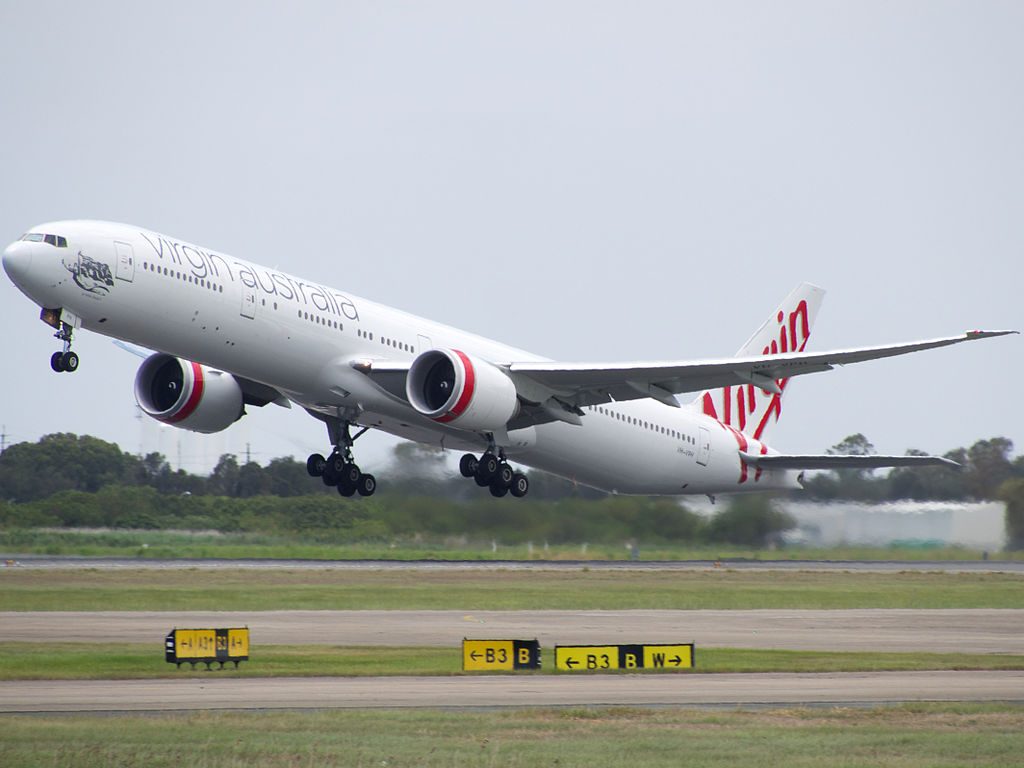
Boeing 777-300ER Virgin Australia Aircraft Fleet Data and Registration Number
| Aircraft Type | Reg | Delivered | Name |
| Boeing 777-3ZG(ER) | VH-VOZ | 7 Dec 2011 | Palm Beach |
| Boeing 777-3ZG(ER) | VH-VPD | 7 Dec 2011 | Avalon Beach |
| Boeing 777-3ZG(ER) | VH-VPE | 7 Dec 2011 | Noosa Heads Beach |
| Boeing 777-3ZG(ER) | VH-VPF | 7 Dec 2011 | Caves Beach |
| Boeing 777-3ZG(ER) | VH-VPH | 7 Dec 2011 | St Kilda Beach |
Virgin Australia Fleet Boeing 777-300ER Cabin Interior Class Configuration and Seats Layout
This Boeing 777-300ER aircraft seats 339 passengers in a three-class configuration and is used on long-haul routes.
There are 37 seats in Business Class, 24 seats in Premium Economy, 75 seats in Economy X and 203 seats in Economy Class.
Virgin Australia flies the Economy X experience on this aircraft.
Economy X offers a more premium experience at the airport and onboard.
Economy X seats have additional legroom, preferred overhead storage space, priority boarding as well as priority screening at the airport.
“The Business” cabin includes 37 flat bed seats, including 24 in the forward cabin and 13 in a rear cabin with a lounge/bar in between.
The reverse herringbone seats are arranged in a 1-2-1 fashion with mood lighting.
Center seats have sliding privacy dividers if you are traveling solo and don’t get a window seat.
High-powered USB charging ports quickly charged devices and a universal power outlet was also available.
When it comes to reverse herringbone seats, there are two types.
One is called the Super Diamond seat by Rockwell Collins (used by British Airways on its new A350, China Airlines, Hong Kong Airlines, Qatar Airways, and WestJet among others).
The other is the Cirrus seat by Safran/Zodiac (used by Air France, American Airlines, Delta, Finnair, JAL among others).
Virgin Australia uses the Super Diamond, which has a fold-down tray table below the entertainment screen.
Virgin Australia’s Boeing 777-300ER premium economy product has three rows of 2-4-2 seating.
Seats are arranged with a whopping 41 inches of pitch, leaving an incredible amount of legroom and personal space.
That impressive pitch allowed Virgin Australia to install seats that recline a whopping 9 inches.
Seat measured 20 inches between the armrests, which is above average for premium economy.
The bifold tray table extended from the armrest.
When unfolded, the tray table measured 14 inches wide by 10 inches deep.
If you needed a little extra space, the tray table moved forward a few inches.
The only pair of seats in the cabin without a fixed armrest were the two seats in the middle of the middle section.
In the seatback, there was a large pocket and two smaller pockets in the front, which were barely noticeable at first but useful for storing cellphone, boarding pass and passport without needing to toss these in the larger pocket with everything else.
Under the seat, there was an adjustable, retractable footrest and a tight area for storing a backpack.
The space was squeezed at each seat by an inflight-entertainment box and the seat supports.
None of the seats had a legrest.
However, flight attendants provided footrests for passengers in bulkhead seats to support their feet while they tried to relax or sleep.
Although bulkhead seats are typically some of the best seats in a cabin, the 41 inches of pitch leave more than enough legroom in the other rows, and the lack of legrest or fixed footrest make the bulkhead seats less desirable.
The seat’s headrest is adjustable up and down and has small wings to cradle your head while you try to sleep.
There were two lavatories at the back of the cabin. It seemed these were technically shared with the economy cabin, but the flight attendants drew a curtain between the economy cabin and the galley where these were.
That dissuaded some — but not all — economy passengers from using them.
The economy seats are arranged in a 3-3-3 configuration, with 2-3-2 near the bathrooms.
They are 18.5 inches (47cm) wide, with a 32-inch (81cm) seat pitch and a 15cm (6in) recline.
The seatback in-flight entertainment system is equipped with a nine-inch (22.9cm) screen.
Seat Map and Seating Chart Boeing 777-300ER Virgin Australia
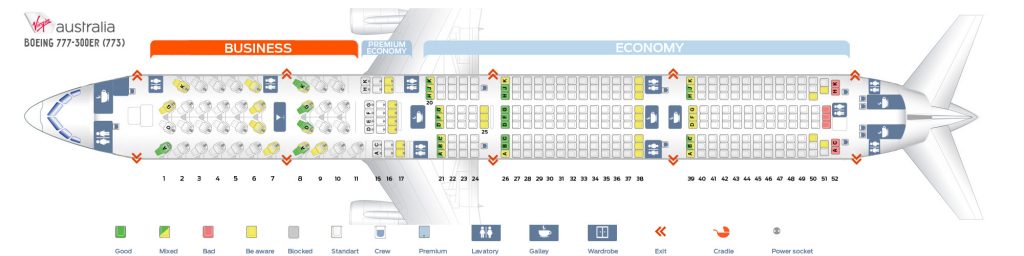
Business class consists of 37 flat bed seats that have 180 degrees recline.
These seats are located in two sections.
First section consists of 7 rows of seats.
The best seat here is considered the seat 1A because it offers more privacy.
Location of the lavatory in front may cause discomfort to passengers of the seats 1G and 2K.
The noise from the bar and lavatory located behind will represent problem for passengers of the seats 6DGK and 7A.
Behind the exit row another 4 rows of business class seats are located.
Thanks to the exit row located in front the seats of the 8th row offer additional space for passengers’ legs.
However, close location of the bar and lavatory may be bothersome as well as for passengers of the seat 9A.
Behind business class 24 recliner seats of premium economy class are located.
These seats have 9 inches recline, are located in 3 rows that have 2-4-2 configuration.
The only disadvantage of the seats of the 15th row is lack of floor storage during take-off and landing.
Limited recline and proximity of the galley and lavatories are the main disadvantages of the seats of the 17th row.
Economy class may accommodate 278 passengers.
The seats of the economy class are divided into three sections.
First section has 6 rows of seats: 2 rows with 3 seats each and 3 rows have 3-3-3 configuration.
Passengers of the seats 20HJK, 21ABC and 21DFG will take advantage of extra legroom.
Among disadvantages: lack of floor storage during take-off and landing, reduced width and close location of the galley and lavatories.
Limited recline is the main disadvantage of the seats 25DFG.
The second section of economy class seats is located behind the exit row.
This section consists of 13 rows of seats that have 3-3-3 configuration.
Due to the exit row located in front the seats 26BC, 26DFG and 26HJ offer extra legroom.
The legroom of the seats 26A and 26K on the contrary is limited because of the exit door that protrudes inside.
Also the seats of the 26th row have the following disadvantages: no floor storage during take-off and landing and reduced width because the tray tables are in the armrests making them immovable.
Location of the galleys and lavatories behind and limited recline are the main disadvantages of the seats of the 38th row.
The third section of economy class seats is located behind another exit row.
There are 14 rows of seats here.
Passengers of the seats 39BC and 39HJ will take advantage of extra space for their legs while the seats 39A and 39K have limited legroom due to exit doors protrusion.
Passengers tend to congregate in the area of the seats of the 39th row while waiting to use lavatories and thus causing discomfort to passengers of these seats.
As the tray tables are built-in the armrests the width of these seats is reduced a little.
Lack of floor storage during take-off and landing is another disadvantage of these seats.
As there are no seats behind the seats 50C and 50H are often bumped by other passengers passing by.
Close location of the lavatories will cause inconvenience to passengers of the seats 51B, 51 DFG, 51J and 52AC, 52HK.
Limited recline makes the seats 51DFG, 52AC and 52HK bad seats.
‘The Business’
- 37 Business suites
- 1-2-1 configuration
- Seat converts to a fully flat bed (80in/203cm long, 28in/71.1cm wide)
- In-flight entertainment with 18 inch touch screen
- USB and universal power charging point
Premium
- 24 seats
- 2-4-2 configuration
- 104cm (41in) seat pitch
- 49.5cm (19.5in) seat width
- 22.8cm (9in) recline
- Seatback in-flight entertainment system with 26.9cm (10.6in) screen.
Economy
- 278 seats
- 3-3-3 configuration (2-3-2 near bathrooms)
- 81cm (32in) seat pitch
- 47cm (18.5in) seat width
- 15cm (6in) recline
- Seatback in-flight entertainment system with 22.9cm (9in) screen.
Boeing 777-300ER Virgin Australia Aircraft Fleet Inflight Amenities and On-Board Services Information
- Audio. Virgin Australia entertainment system offers several audio programs featuring a selection of music, news, sports, and children’s programs. More Information
- Video. Virgin Australia entertainment system offers a selection of programs featuring films, news, sports, variety, lifestyle, and children’s programs. Business Class has 18 in touch screens, Premium Economy Class has 10.6 in screens, and Economy Class has 10 in screens. More Information
- AC Power. Every Business Class seat has a 110v AC universal power port. Economy and Premium Economy seats have no power ports.
- Internet. Virgin Australia provides WiFi on their Sydney, Melbourne and Brisbane to Los Angeles flights. 1 hour plan: A$8.99 / US$6.85 / NZ$9.93 Flight plan: A$19.99 / US$15.23 / NZ$22.08
- Food. Food and beverages are available for purchase on flights longer than one hour. More Information
Virgin Australia Aircraft Fleet Wide-Body Boeing 777-300ER Images Gallery

Seat Map and Seating Chart Boeing 777 300ER Virgin Australia 
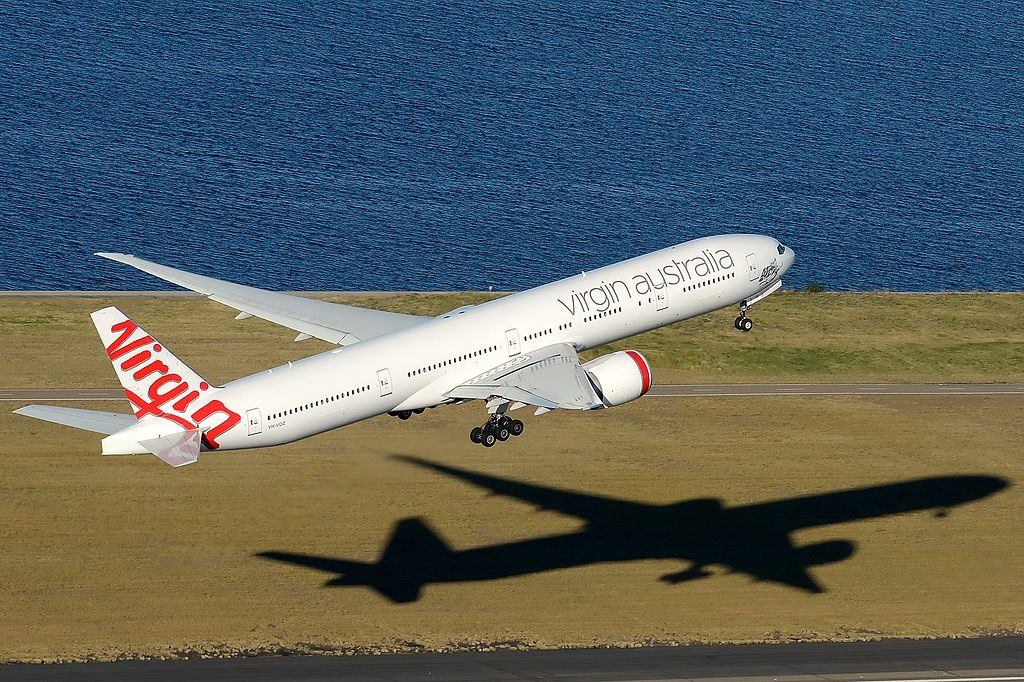
VH VOZ Virgin Australia Boeing 777 3ZGER Palm Beach take off from Sydney Airport 
Virgin Australia Boeing 777 300ER VH VPD Avalon Beach at Melbourne Airport 
VH VPE Boeing 777 3ZGER Virgin Australia Noosa Heads Beach 
VH VPF Virgin Australia Airlines Boeing 777 3ZGER Caves Beach at Los Angeles International Airport Virgin Australia VH VPH Boeing 777 3ZGER St Kilda Beach at Brisbane Airport
Thanks to visiting AirlinesFleet.com and read article : Virgin Australia Fleet Boeing 777-300ER Details and Pictures.